Watercolour Styles Week 4 - Expressionism
Posted: Sunday, 8 February 2026 @ 12:34
In Week 4 of our tour through Watercolour Artistic Styles, we are looking at Expressionism a wonderful style here the emphasis is less on what is there and more on how it makes you feel!
What's it all about?
Expressionist painters use colour, exaggeration and bold decisions I an attempt to communicate mood and feeling.
You may still decide to paint a landscape, figure or a simple object, but detail and accuracy are secondary to atmosphere, energy and emotion.
Expressionism as a movement began in the early 20th century in Northern Europe and whilst initially was based around painting and poetry can be applied to any art form.
One of the most famous expressionist pieces is by Edvard Munch:
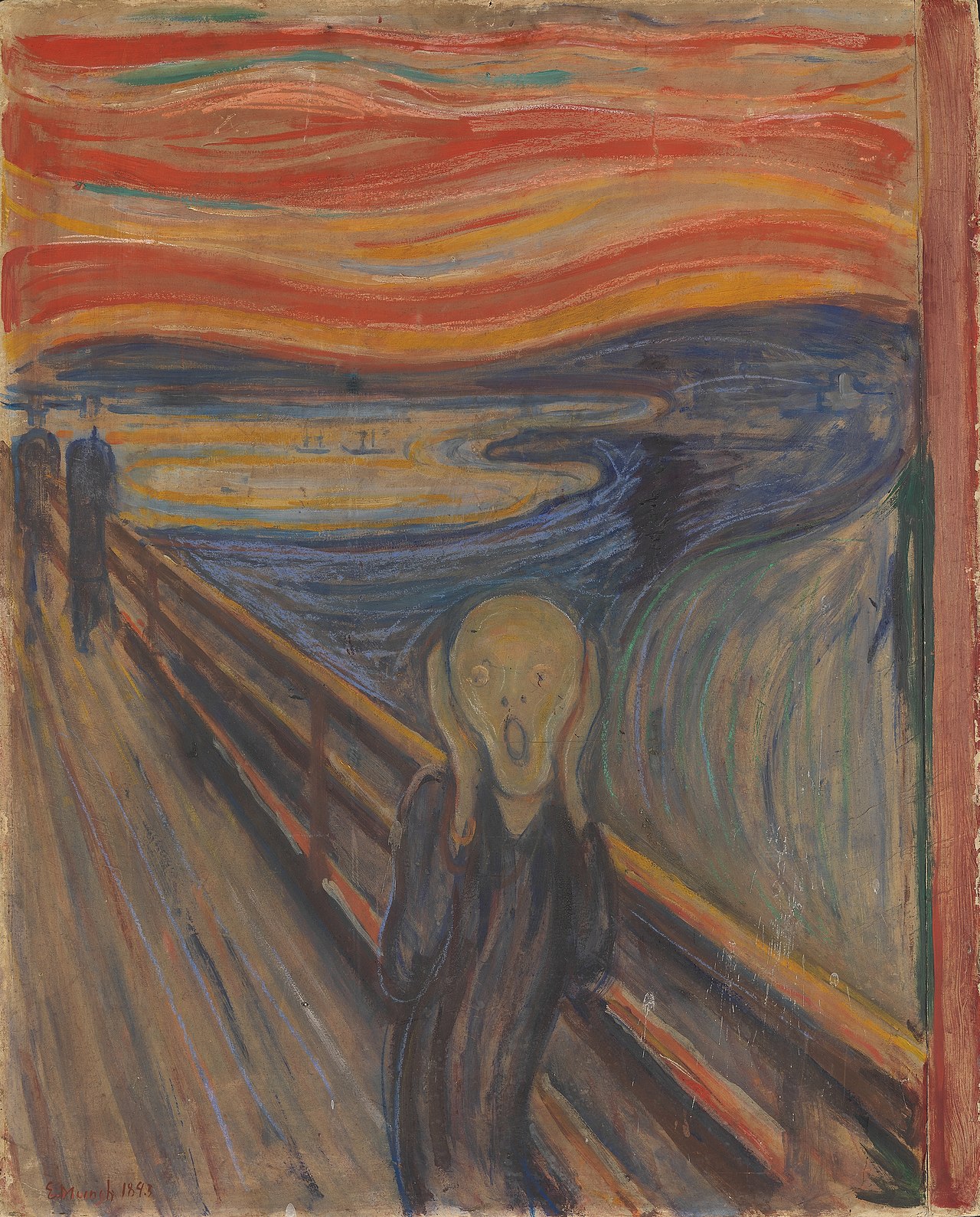
"The scream"
As you can see. detail is not important but the more you look at this the more you get a deep feeling of discomfort and angst - it's a powerful piece!
What makes it unique?
- Emotions over accuracy: Colours are applied based on the mood and emotion that you want to convey, they can be intensified, shifted or even completely changed from what the subject actually looks like, if it better conveys the mood that you want.
- Bold value contrasts: Strong darks against light areas create high contrast which indicates drama and urgency.
- Expressive brushwork: A big factor in expressionism is the presence of brush marks as a deliberate device to bring energy and feeling. Strokes can be rough, urgent or lyrical and are used to emphasise the mood.
- Distortion and simplification: Shapes may be simplified or exaggerated to strengthen the message of the painting.
- Use of Colour as a language: Warmth, Cold, tumult and calm. These are all examples of what can be said with colour alone, conveying the overall mood and tone of the painting.
- Edges are used to drive intention: Deliberate use of edges can also enhance the mood. Hard and sharp edges can feel decisive and intense. Soft and lost edges convey a feeling of uncertainly and dreaminess.
A few artists to explore
- Egon Schiele: Known for his raw line and emotionally charged figures, Schiele’s work shows how a few decisive marks can carry enormous intensity. He produced an unusual number of self portraits and was a protege of Gustav Klimt
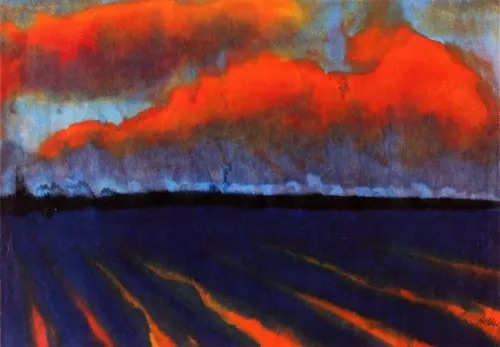
- Emil Nolde: Celebrated for powerful colour and dramatic contrasts, Nolde’s watercolours show how pigment and simplicity can create real force
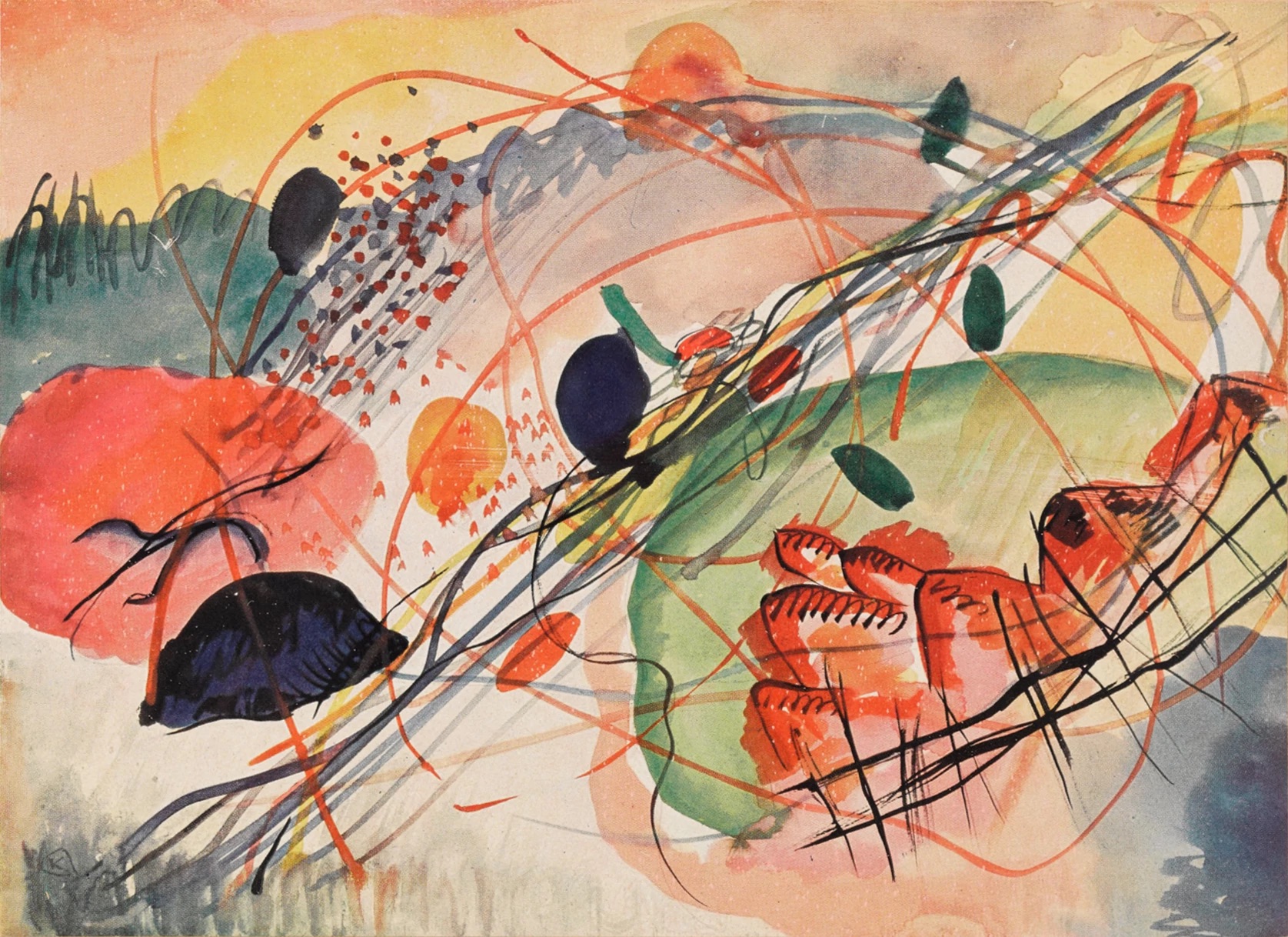
- Wassily Kandinsky: A key figure in expressive abstraction, Kandinsky used watercolour to explore mood through colour, rhythm, and shape. Imagine trying to visualise music on paper.
Fancy giving it a try?
-
Choose a simple subject: a tree, a lane, a doorway or a small still life.
-
Decide on one mood: stormy, quiet, joyful, lonely or dramatic.
-
Paint using only 3–4 colours that suit that mood. Push the contrasts a little further than you normally would.
-
Finish with a few confident dark accents (sparingly) to “lock in” the feeling.
Keep asking as you paint: “Does this feel right?” rather than “Does this look right?”
Please do let me know how you get on if you have a go - you can share it on our Facebook group which you can access using the link below!
Happy Painting
Martin