Watercolour Styles Week 2
Posted: Tuesday, 27 January 2026 @ 09:48
Welcome to the second instalment in our series exploring different watercolour styles.
This week I want to look briefly into the world of botanical and natural history illustration.
If you were to have paged through a Botany or natural history book from before the 20th century you will no doubt have marvelled at the beautify rendering of plants and animals on the page. This encapsulates a tradition where observation, precision and beauty go hand in hand.
Take this example by Margaret Rebecca Dickinson (1821-1918) who was an amateur Victorian botanist on the border of England and Scotland.
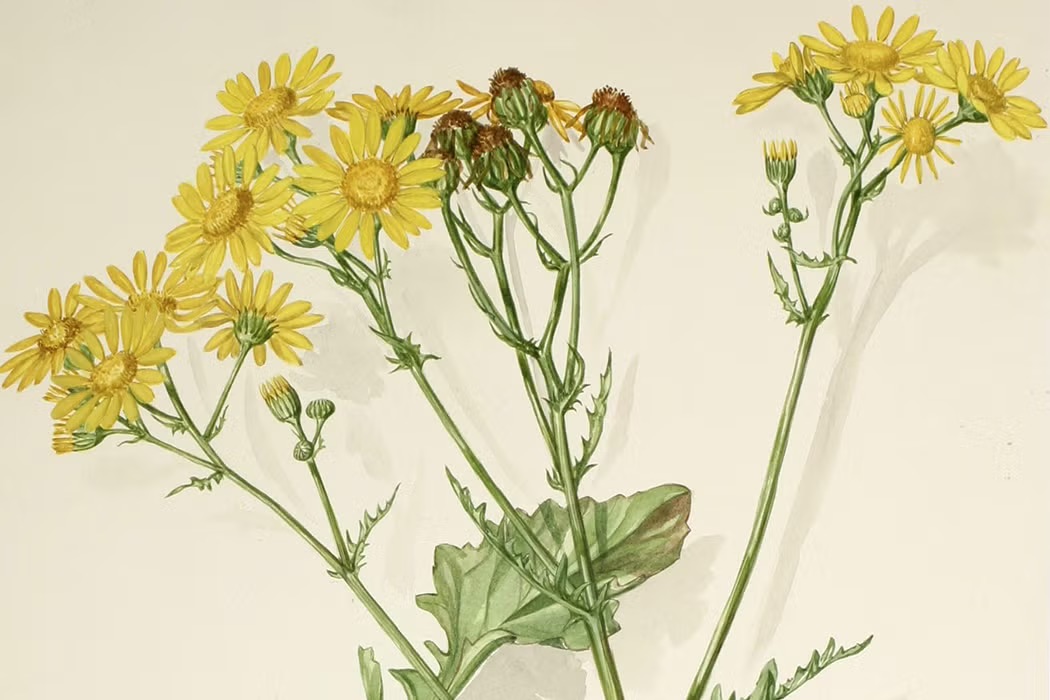
What epitomises this style?
Botanical watercolour is primarily about accuracy and clarity.
The purpose of these illustrations was for scientific and educational purposes, so the artists in this tradition aimed to capture the true form, colour, and detail of plants and flowers.
This was something that suited Watercolour as a medium perfectly.
What are the hallmarks of Botanical Illustration?
- Accuracy and clarity: Remember that these images were for scientific and educational reference so the aim is to depict the subject as truthfully as possible, with every detail observed and recorded.
- Controlled wet-on-dry technique: Layers are applied to dry paper for crisp, clean edges and fine detail. There is minimal bleeding of colour and water here as accuracy is key
- Glazing for realism: Thin and almost transparent layers are built up one after the other to achieve depth and believable textures.
- Focus on structure: Careful drawing and planning are key and evident in these images. All the subjects features are captured and sketched before being flashed out in layers of colour.
- Minimal background: A common feature of these is the lack of a background. After all the subject is everything that the image is about, so any background would just be a distraction. You can see in the image above that the sole concession is the presence of a shadow to deliver a feeling of depth.
Some big names in the style:
- Maria Sibylla Merian: We start a LONG time ago back in the late 17th century where Merian lived in Germany as an entomologist, naturalist and scientific illustrator. Merian’s most well known studies come from a self funded 2 year trip to the South American country of Suriname where she painstakingly drew and illustrated as much of the floral and fauna as she could. She was particularly taken by the Pineapple which she thought to be the best of all the fruits:
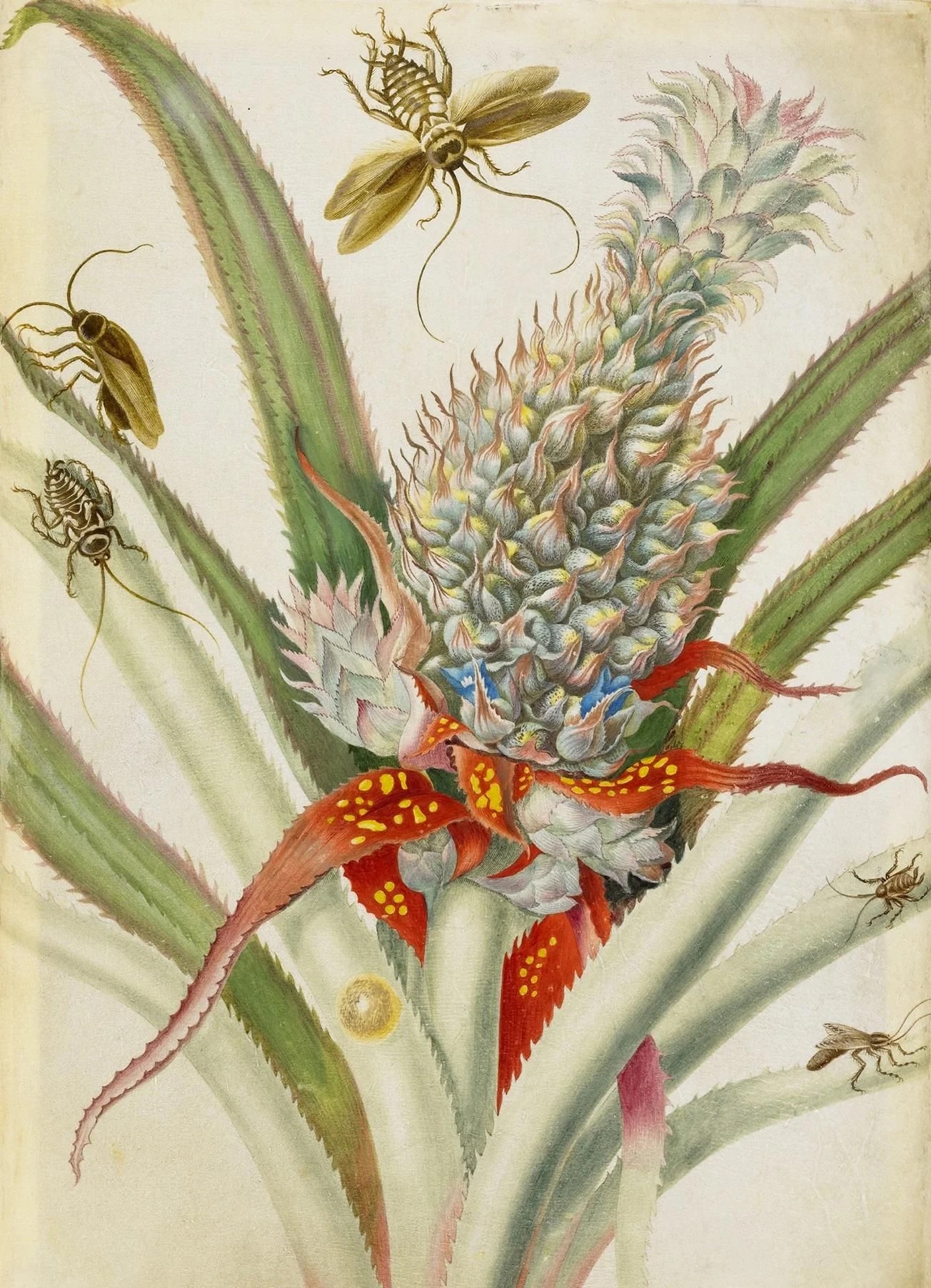
'pineapple and examples of five insects'
- Pierre-Joseph Redouté: Known as the “Raphael of flowers,” Redouté’s elegant watercolours of roses and other blooms set the standard for botanical illustration in the 18th and 19th centuries. He was patronised by not only Kings Louis-Phillipe and Louis 16th, but also Marie Antoinette and Josephine Bonaparte. This level of exposure was key in his success and he was one of the first 'influencers' of botanical art
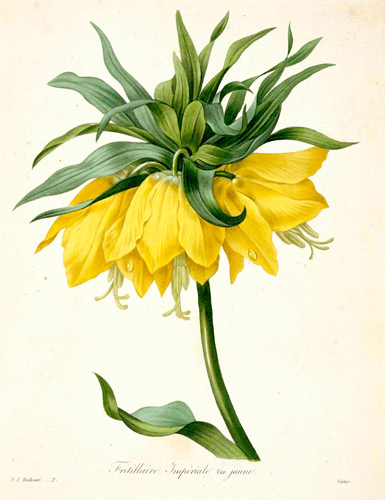
'imperialis-var-jaune'
- Marianne North: Whilst relying more on Oils, Marianne was an intrepid traveler and prolific painter between 1850 and 1880. She travelled the world capturing botanical scenes from places such as Canada, Cylon, Japan, Borneo and Java. She was a restless traveler and a fascinating character to have a read about.
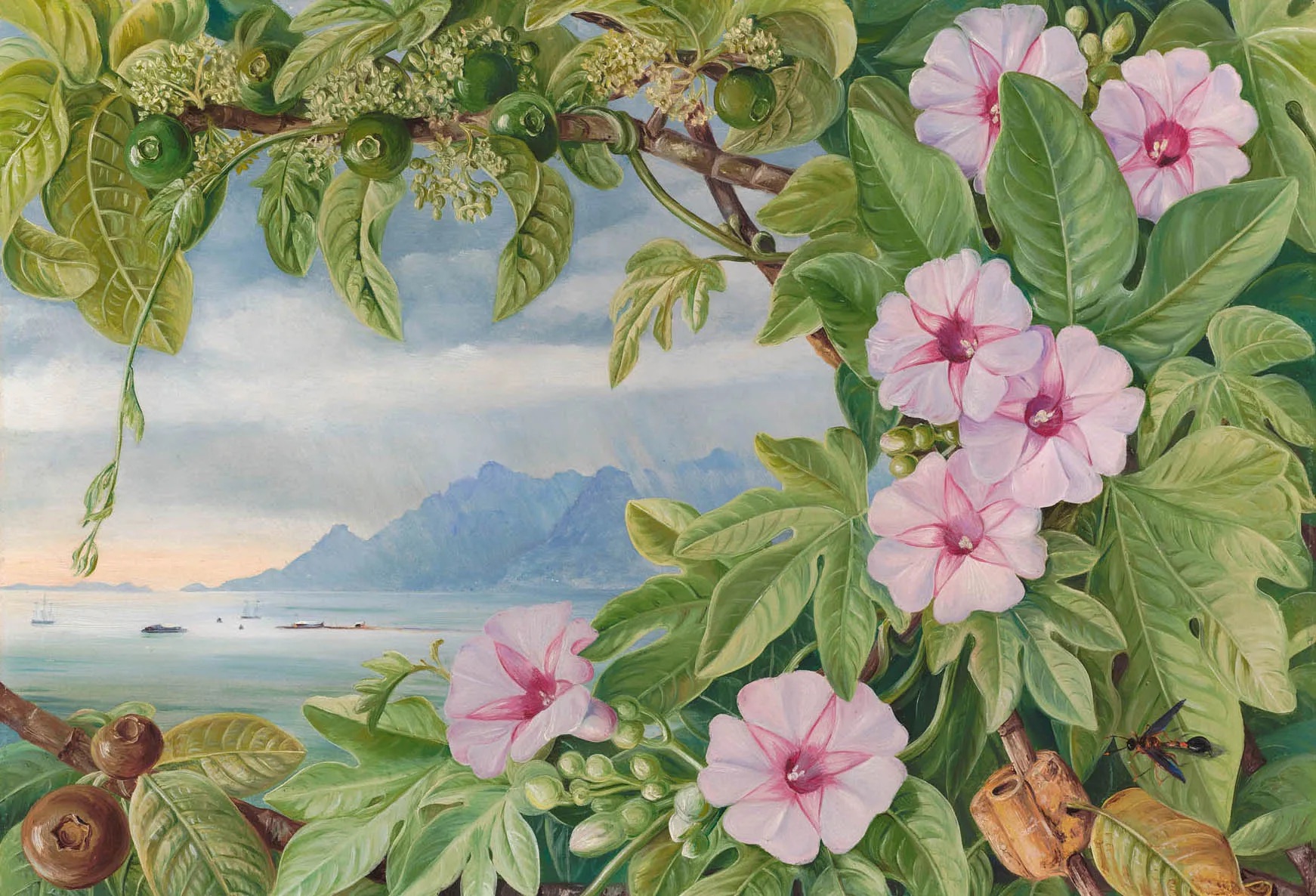
'Ipomoea and Vavangue with Mahe Harbour in the distance, painted on Madagascar'
Fancy having a go?
- Pop outside and choose a leaf from your garden or a houseplant.
- Paint a flat wash to establish the base colour and shape.
- Once dry, glaze a second layer to add veins and subtle shadows for depth and realism.
Focus on observation and let the structure and beauty of your subject guide your brush.
Thank you for all your replies to the last newsletter - I have read them and the main areas of interest were skies and perspective so I will look into the Terry Archives and see what I can pull together for you, so watch this space.
Happy Painting!